Francis J. Gavin on McKinsey's
What Matters (h/t
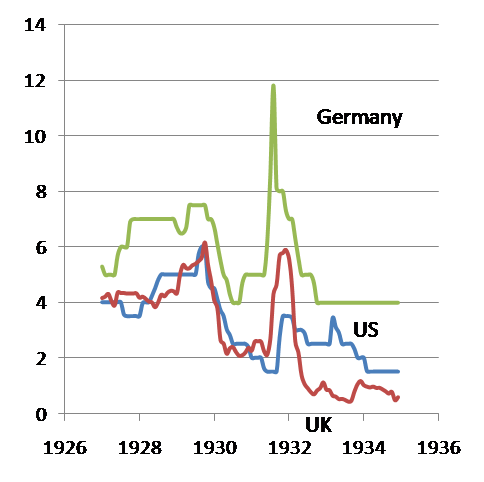
infectiousgreed) compares the current mess to the great depression. He is somewhat reassuring: "The magnitude of the Great Depression was unprecedented and unlikely to be repeated—the unemployment rate in the United States reached 25 percent, home foreclosures were an order of magnitude larger, and the gross domestic product fell by almost half between 1929 and 1933. Furthermore, our economic policymakers and politicians have not repeated the disastrous policies of the past, which included raising interest rates and hiking trade barriers."
His comments on the political backdrop of the great depression are also worth noting: "But the key differences between the current crisis and the past are less economic than political. The Great Depression was the offspring of the killing fields of Europe: the First World War had destroyed trading patterns, undermined currencies, and produced massive public debts. Who would foot the bill for this catastrophe? The Americans had financed the British and French victories, and expected to be paid back in full. The British and French demanded that Germany carry the cost by paying reparations. Germany —which been victorious on their Eastern front and had prevented Allied forces from entering their territory—had agreed to end the war in part because of Woodrow Wilson’s promise not to impose a victor’s peace. When this promise was broken and massive reparations were imposed, a bitter decade-long battle over who would pay what ensued. From this toxic environment of distrust and enmity emerged a series of unsustainable deals, whereby America financed Germany’s reparations to Britain and France, which were recycled back to the United States in the form of war debt payments. If American financing dried up – which it did during the late 1920s—the whole scheme would collapse, taking the international monetary system with it."
He then concludes: "There are valuable lessons from history that can be applied to policy today. But we should keep in mind we also have important advantages our forebearers did not. Most fortunately, we live in an era when the threat of a great power war in the developed world is remote. The major players may have their political differences, but nothing approaching the bitterness and distrust that marked international relations in the last century. In addition, the greater interconnectedness of the world that has grown up over the past 20 years will act as a counterweight to the tendency to pursue purely self-interested policies. This backdrop will make continued cooperation much easier, and should make another Great Depression far less likely."




 Posts
Posts

